
WASHER · CARE GUIDE
Why does my washer smell?
For a musty washer, start with laundry left in the drum, detergent residue, and your model’s cleaning instructions. A burning or strong sewage odor needs a different response—not another cleaning cycle.
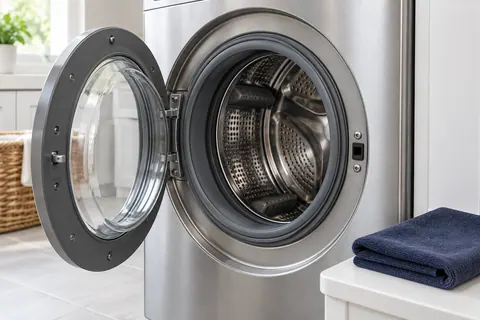
START HERE
A few safe checks.
General guidance, not a diagnosis. Your exact model’s manual takes priority. No panels, wiring, or gas connections need to be opened.
01Remove laundry promptly
Take clothes out after the wash finishes. When the machine is off, wipe accessible moisture from the door seal and drum with a dry cloth. Follow the manual’s drying guidance, keeping children and pets away from an open machine. [1]
02Review your detergent routine
Use the detergent type your washer requires, including HE detergent where specified. Measure for the load and product directions. More detergent is not a shortcut to cleaner laundry and can leave odor-causing residue. [1]
03Use the model’s cleaning program
Find the cleaning cycle and permitted cleaner in your exact model’s manual. Follow its instructions, with no laundry in the drum. Do not copy another model’s bleach quantity, compartment, or button sequence. [1]
When to get help
If a musty odor returns after the recommended care, ask for an assessment. A sewage smell may involve the drain installation or household plumbing. Describe it to a qualified professional rather than pulling the washer out or altering the hose.
Before you contact a professional
These details help explain the issue without taking anything apart.
- Whether the smell is musty, sewage-like, or burning, and when it occurs.
- Your detergent, approximate amount, and cleaning routine.
- Any standing water, drainage warning, or recurring error code.
Sources & model guidance
These official references informed this guide. Brand-specific features may not apply to your appliance; no manufacturer affiliation is implied.